Read more: Psychiatric Research and the Targeted Treatment of Depression
Medication errors are finally receiving the attention they deserve. According to the U.S. Agency for Health Research and Quality, 1.9 million people became ill enough to require treatment in emergency rooms or hospitals as a result of medication errors in 2008.
Medication errors are finally receiving the attention they deserve.

Richard J. Metzner, M.D.
Clinical Professor
Semel Institute for Neuroscience and Human Behavior at UCLA
Founder, DepressionConsultant.com
According to the U.S. Agency for Health Research and Quality, 1.9 million people became ill enough to require treatment in emergency rooms or hospitals as a result of medication errors in 2008 (1). These mistakes were made by prescribers, pharmacies and patients deviating from medications and dosages known to be safe and effective. Another type of mistake which can be equally deleterious occurs when approved medications are prescribed, dispensed and used according to established guidelines, but the medication is the wrong choice for a particular patient. When lack of reliable guidelines about how to match patients to medications characterizes an entire therapeutic category, it is likely that side-effects, drop-outs and other adverse consequences of treatment will be high, remission rates will be low and benefits in placebo-controlled studies will be marginal. That, unfortunately, describes the status of antidepressant treatment as reflected in current research.
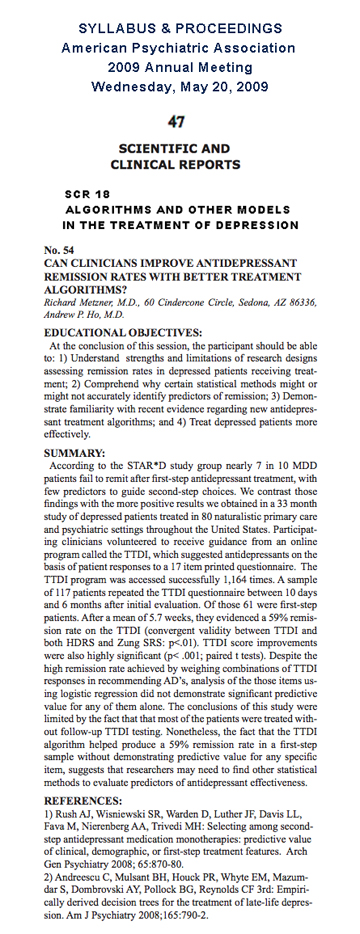
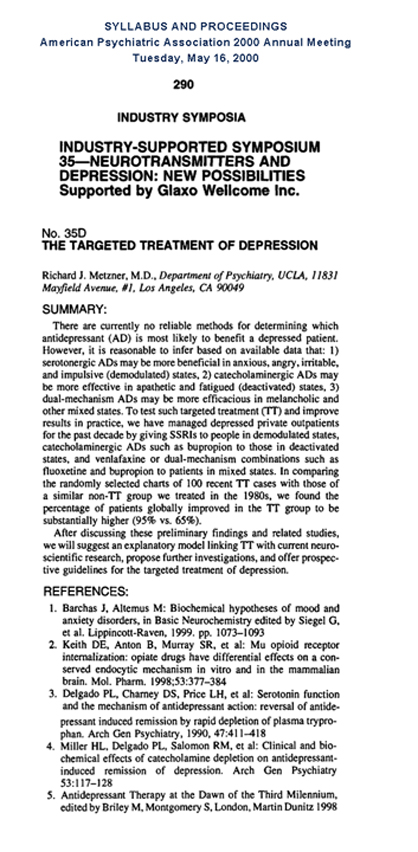
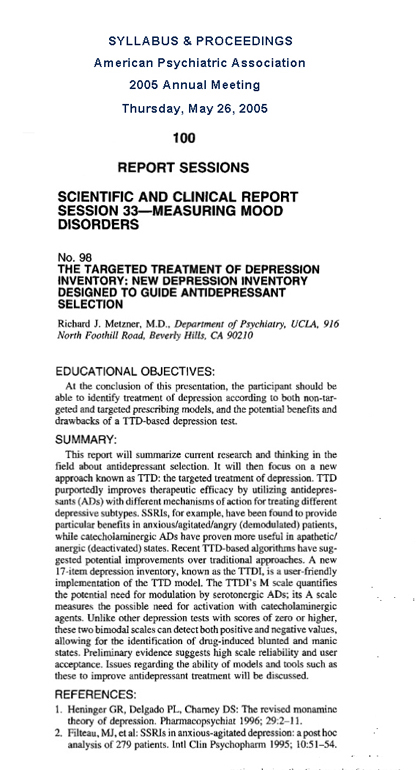
What might better guidelines look like? Using serotonergic antidepressants (SSRIs like fluoxetine) for patients who need reduced anxiety and hostility, catecholaminergic agents (NDRIs like bupropion) for patients who need increased energy and motivation and combinations (SNRIs like venlafaxine or combinations of SSRIs + NDRIs)) for patients who need both may bring higher remission rates than standard care in clinical practice (2). For reasons that may have more to do with sources of financial support than science, guidelines like these have yet to be evaluated in controlled research. Instead the evidence base has been limited to a spate of pharmaceutical company marketing trials designed to prove the effectiveness of their own products and one massive NIMH study (STAR*D) that limited its attention to what happens after one SSRI fails. This deficiency in the existing data has left institutional psychiatry clinging to the erroneous conclusion that all antidepressants are equally effective with no method to match them to individual patients, and enabled a growing number of antidepressant "debunkers" (mostly psychologists) to claim that their own treatments work better (3).
As a clinician who has observed successful antidepressant use by thousands of patients in real world settings, I agree with those who say that he best way to implement effective antidepressant treatment is by combining measurement-based recommendations with information gathered in working up individual patients. Getting the first treatment right is a crucial step in helping depressed patients achieve remission. It has been the failure to do that in the published research that lowers remission rates and generates the large number of drop-outs seen in studies like the STAR*D. Avoiding prescribing mistakes in this area of medicine can make a huge difference in the lives of patients and families. It can also reduce the substantial health care costs associated with wrongly-prescribed antidepressants.
1. U.S. Agency for Healthcare Research and Quality. National Healthcare Quality Report, 2011. http://www.ahrq.gov/research/findings/nhqrdr/nhqr11/chap3.html
2. Metzner R and Ho A. A Symptom-Guided System for Improving Antidepressant Outcomes: An Observational Study, 2010 http://depressionconsultant.com/images/pdf/ttdireport.pdf
3. Pigott HE, Leventhal AM., Alter GS. & Boren JJ.. Efficacy and effectiveness of antidepressants: Current status of research. Psychotherapy and Psychosomatics 2009:79(5), 267–279. http://www.karger.com/Article/FullText/318293
4. Shelton RC, Trivedi MH. Challenges and algorithm-guided treatment in major depressive disorder. J Clin Psychiatry 2011: 72(4). http://www.psychiatrist.com/abstracts/abstracts.asp?abstract=201104/0411e14.htm